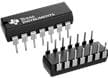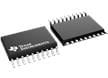

SN74HC368N

Texas Instruments
595-SN74HC368N
SN74HC368N

Mfr.:

Paglalarawan:
Buffers & Line Drivers Tri-State Hex

ECAD Model:
I-download ang libreng Library Loader para i-convert ang file na ito para sa iyong ECAD Tool. Matuto nang higit pa tungkol sa ECAD Model.

May Stock: 155

Stock:
155 Maaaring Ipadala Agad
Lead-Time ng Pabrika:
6 (na) Linggo Tinatayang oras ng paggawa sa pabrika para sa mga bilang na mas marami kaysa ipinakita.
Minimum: 1   Mga Multiple: 1
Presyo ng Unit:
₱-.--
Ext. Presyo:
₱-.--
Est. Taripa:

Presyo (PHP)

Dami Presyo ng Unit
Ext. Presyo
₱66.70 ₱66.70
₱48.43 ₱484.30
₱43.73 ₱1,093.25
₱38.63 ₱3,863.00
₱36.19 ₱9,047.50
₱34.74 ₱17,370.00
₱32.25 ₱32,250.00
₱30.51 ₱152,550.00

Katangian ng Produkto Value ng Attribute Pumili ng Attribute
Texas Instruments
Kategorya ng Produkto: Mga Buffer at Line Driver
RoHS:  
HC
6 Input
6 Output
Inverting
PDIP-16
- 7.8 mA
7.8 mA
8 uA
2 V
6 V
80 uA
- 40 C
+ 85 C
Through Hole
Tube
Brand: Texas Instruments
Bansa ng Pag-assemble: Not Available
Bansa ng Diffusion: US
Bansang Pinagmulan: MY
Uri ng Logic: CMOS
Dami ng Channel: 5 Channel
Uri ng Output: 3-State
Uri ng Produkto: Buffers & Line Drivers
Propagation Delay Time: 120 ns at 2 V, 24 ns at 4.5 V, 20 ns at 6 V
Series: SN74HC368
Dami ng Pack ng Pabrika: 25
Subcategory: Logic ICs
Timbang ng Unit: 1 g
Nahanap na mga produkto:
Para maipakita ang mga katulad na produkto, pumili ng kahit na isang checkbox man lang
Pumili ng kahit isang checkbox sa itaas para magpakita ng katulad na produkto sa kategoryang ito.
Mga Piniling Attribute: 0

Kailangang i-enable ang JavaScript para gumana ito.

CNHTS:
8542399000
CAHTS:
8542390000
USHTS:
8542390090
JPHTS:
8542390990
TARIC:
8542319000
MXHTS:
8542399999
ECCN:
EAR99

SN74HC368 Hex Inverting Buffers

Texas Instruments SN74HC368 Hex Inverting Buffers are designed to improve the density and performance of clock drivers, 3-state memory address drivers, and bus-oriented receivers and transmitters. The Texas Instruments SN74HC368 devices are organized as 2-line and dual 4-line buffers/drivers with active-low output-enable (1/OE and 2/OE) inputs. When /OE is low, the device passes inverted data from the A inputs to the Y outputs. The outputs are in the high impedance state when /OE is high.